If your physicians are spending nights on non-urgent calls or your emergency departments are filling up with cases that could have been handled elsewhere, the issue is not just patient behavior. It is access.
Large health systems are under more pressure than ever to meet rising patient demand with limited resources. Expanding access is important, but so is protecting your people, reducing unnecessary utilization, keeping patients connected to your network, and managing costs across the organization. A nurse-first triage line can help you do all of these.
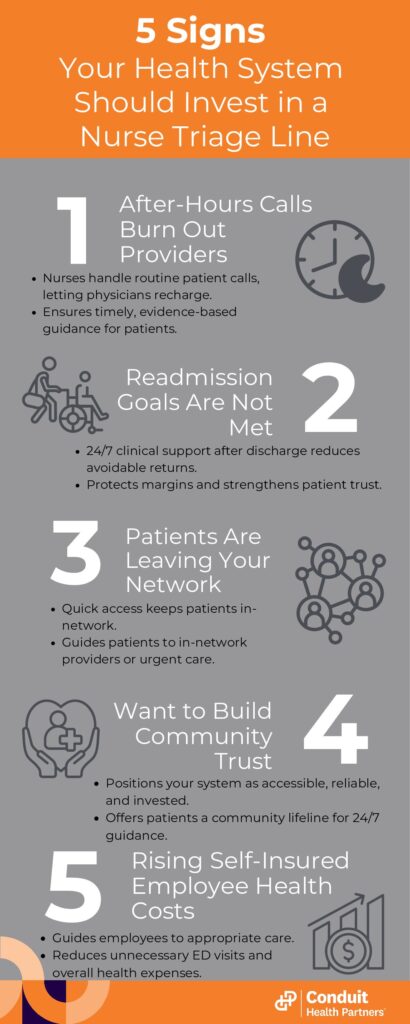
Here are five signs it may be time to invest in a nurse triage line:
1. After-Hours Calls Are Burning Out Your Network Providers
When providers are fielding routine patient calls after hours, it can lead to fatigue, inconsistent advice, and delayed care. A nurse-first triage line connects patients directly to trained nurses who assess symptoms, offer guidance, and escalate only when necessary. Your network providers can recharge without interruption, and your patients receive timely, evidence-based answers.
2. Readmission Goals Are Not Being Met
Falling short on readmission targets drives higher costs, reduces available bed capacity, and increases strain on care teams. A nurse-first triage line provides patients with 24/7 clinical support after discharge, addressing concerns early, reinforcing care instructions, and connecting them to the right follow-up. This reduces avoidable returns, protects margins, and strengthens patient trust in your system.
3. Patients Are Leaking Out of Your Network
If patients cannot get help quickly, they will go where they can, whether that is an urgent care center, retail clinic, or third-party virtual platform. Every visit outside your network means lost volume and weaker continuity of care. A nurse triage line helps close those gaps by guiding patients to your in-network providers, urgent care centers, or virtual care options.
4. You Want to Strengthen Your Reputation as a Trusted Community Resource
Access to care is more than a convenience. It is a reflection of your commitment to your community. A nurse-first triage line serves as a community lifeline, offering 24/7 clinical support and guidance to patients and families. It positions your organization as accessible, reliable, and invested in the health of the people you serve, which builds trust and reinforces your reputation as a partner in community well-being.
5. Your Self-Insured Employee Health Plan Costs Are Rising
If your health system is self-insured, every unnecessary ED visit or high-cost care episode for your own employees impacts your bottom line. A nurse-first triage line can serve your staff as well as your patients, guiding employees to the most appropriate level of care. This improves access for your workforce, helps them make informed decisions, and reduces overall health care expenditures for your organization.
If any of these sound familiar, it may be time to explore a nurse triage solution designed around your patients and your teams.
At Conduit Health Partners, we bring a nurse-first approach that gives patients access to experienced registered nurses 24/7. Our nurses use evidence-based protocols to guide care decisions and connect patients to the right next step within your system.
With more than 800,000 nurse triage calls managed across 400 facilities nationwide, we offer the experience, scalability, and partnership you need to meet today’s demands and prepare for tomorrow.