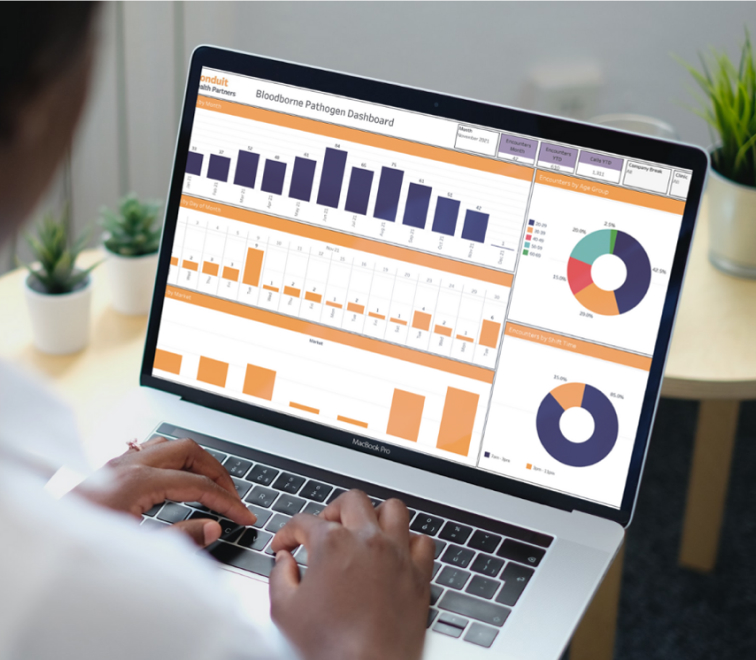
Every day, health care administrators check in on their key performance indicators. They track what’s going well and what’s not. When metrics fall short, the focus often shifts to familiar territory—staffing levels, communication issues, throughput, or care delivery gaps. These are important areas to address.
But one operational factor often gets overlooked: patient flow.
Patient flow doesn’t just affect one department. It moves through the emergency department, perioperative services, inpatient units, post-acute care, transport, and even finance. When flow breaks down, the effects ripple across the entire system. Capacity shrinks. Wait times grow. Staff gets overextended. Patients end up in the wrong place or leave without being seen.
When flow works well, it creates alignment between clinical need and system resources. That alignment drives results.
Below, we’ve outlined the top KPIs where flow makes a measurable impact and why optimizing your transfer center can be a powerful lever to improve performance.
Inbound Transfer Rate
If your system struggles to accept patient transfers quickly, you’re likely losing patients to competing facilities.
Health systems with high inbound transfer success often have a centralized, clinically informed transfer center. When referring providers trust that their patients will be accepted and placed quickly, they keep coming back. Improving inbound transfers strengthens network integrity and supports both growth and revenue.
Emergency Department Boarding Time
ED boarding isn’t just an emergency department problem. It is often the result of delays in patient movement throughout the hospital and across the system. When beds aren’t available, or when interfacility transfers are delayed, patients wait in the ED longer than they should.
Optimizing patient flow helps reduce those bottlenecks. It gets patients out of the ED and into the appropriate level of care, which protects safety, opens capacity, and reduces staff stress.
Left Without Being Seen (LWBS) Rate
Patients who leave without being seen usually do so because they’ve waited too long. When this happens, it not only impacts key quality indicators, it affects trust in your organization.
A centralized patient transfer center improves patient flow, decreasing wait times and reducing the possibility of people leaving without being seen.
Average Length of Stay (ALOS)
Extended inpatient stays aren’t always about medical necessity—they can be a symptom of delayed transfers to the next appropriate setting. When patients remain in acute beds because post-acute or alternate-site placement is stalled, capacity suffers and costs rise.
A centralized patient transfer center streamlines these transitions by matching patients to the right facility faster. The result is reduced unnecessary inpatient days, improved bed turnover, and more efficient use of resources across the system.
30-Day Readmission Rate
Readmissions can spike when patients are discharged to settings that can’t meet their needs or when follow-up placement is delayed. Limited access to the right post-acute or specialty facility often plays a role.
Transfer centers can coordinate timely placement into the most appropriate facility after acute care, ensuring patients receive the right level of ongoing support. This helps lower avoidable readmissions and protect performance in value-based arrangements.
Bed Occupancy Rate
High occupancy can mean full utilization or it can mean misalignment. If one part of a health system network is overwhelmed while another has open beds, the challenge is often visibility, not demand.
A centralized transfer center enables real-time load balancing, ensuring patients are placed where capacity exists. This improves throughput, reduces bottlenecks, and maximizes use of existing resources.
HCAHPS Patient Satisfaction Score
Patients may not know the term “patient flow,” but they feel its impact. When they wait too long or get passed from one department to another without explanation, it shows up in their satisfaction scores.
A well-functioning transfer center keeps movement smooth, reduces delays, and supports clear, timely transitions — all of which contribute to better patient experiences and stronger satisfaction scores.
Making Patient Flow Part of your Hospital KPI Conversation
If your team is reviewing metrics and building action plans to improve them, patient flow needs to be part of your hospital KPI conversation. It is not a background function—it is a core operational strategy that connects clinical quality, financial performance, and patient experience.
At Conduit Health Partners, we help health systems uncover where flow is breaking down and where transfer center optimization can deliver measurable results. If your KPIs are under pressure, the answer might not be more effort—it might be better movement.
To explore where flow is impacting your performance, download our KPI infographic and share it with your team.
For a deeper discussion, contact our team today.